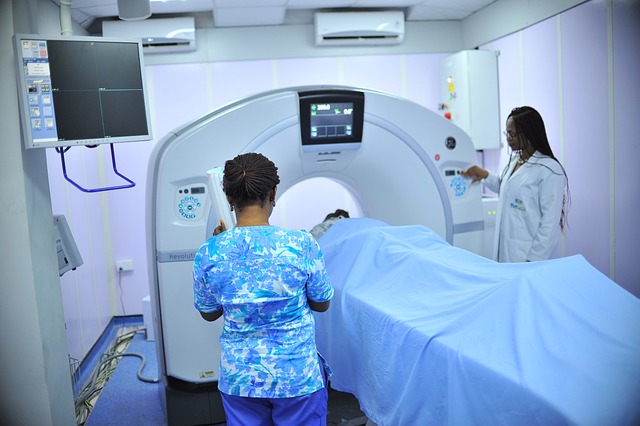
Healthcare Six Sigma examples demonstrate its effectiveness in reducing readmission rates through data-driven process improvement. By identifying root causes, this methodology eliminates defects, optimizes workflows, and enhances patient care. Success stories across sectors show significant reductions in readmissions, infections, and product defects. Continuous monitoring, feedback loops, and tailored training empower healthcare professionals to drive quality improvement. Implementing Six Sigma frameworks fosters a culture of data-driven decision-making, resulting in better patient outcomes, resource efficiency, and cost reduction.
Reducing hospital readmission rates is a paramount concern within healthcare systems globally, representing not just a financial burden but also impacting patient outcomes and quality of life. The complexity of this challenge necessitates innovative approaches, and Healthcare Six Sigma offers a proven framework for success. By leveraging data-driven methods akin to those seen in prominent Healthcare Six Sigma Examples, such as reducing variability in care protocols and enhancing patient monitoring, facilities can significantly lower readmission rates. This article delves into the application of Six Sigma principles, providing practical insights into navigating this intricate landscape.
- Understanding Readmission Rates in Healthcare: The Challenge
- Introducing Six Sigma Methodology for Quality Improvement
- Data Analysis: Identifying Root Causes for Readmissions
- Process Mapping and Optimisation: A Healthcare Six Sigma Example
- Continuous Monitoring and Feedback Loops for Sustained Success
Understanding Readmission Rates in Healthcare: The Challenge

Understanding Readmission Rates in Healthcare: The Challenge
In healthcare, readmission rates serve as a critical indicator of patient outcomes and organizational performance. They represent the percentage of patients who are admitted again within a specified period after their initial discharge. High readmission rates not only impose significant financial burdens on healthcare systems but also underscore systemic issues affecting patient care continuity and quality. For instance, according to recent data from the Centers for Medicare & Medicaid Services (CMS), approximately 15% of all hospital stays result in readmissions within 30 days, highlighting a pressing need for effective solutions.
One proven approach to tackling this challenge is through Healthcare Six Sigma, a data-driven methodology focused on process improvement and quality enhancement. By adopting Six Sigma principles, healthcare organizations can systematically identify and eliminate root causes of readmissions, leading to reduced rates and improved patient outcomes. For example, a recent study found that implementing Six Sigma in home healthcare services resulted in a 20% drop in 30-day readmission rates within the first year, showcasing its substantial impact.
Comparing Lean vs. Six Sigma in healthcare, each offers unique advantages. While Lean focuses on streamlining workflows and reducing waste, Six Sigma delves deeper into statistical analysis to identify and eliminate defects at their source. In terms of trends and future predictions, Healthcare Six Sigma is increasingly recognized as a game-changer in managing complex patient populations. As the industry evolves, more organizations are turning to advanced analytics and process optimization techniques to enhance care delivery and reduce readmissions. For instance, predictive modeling and risk stratification tools powered by artificial intelligence (AI) can anticipate readmission risks, enabling proactive interventions.
To leverage these insights effectively, healthcare providers should prioritize continuous quality improvement initiatives aligned with Six Sigma principles. By fostering a culture of data-driven decision-making and engaging multidisciplinary teams, organizations can achieve significant improvements in readmission rates. Visiting us at six sigma applications in healthcare offers further exploration of these concepts, providing actionable advice tailored to the unique needs of different healthcare settings.
Introducing Six Sigma Methodology for Quality Improvement
The healthcare industry faces significant challenges when it comes to managing readmission rates, with a considerable impact on patient outcomes and resource utilization. Here, Six Sigma methodology emerges as a powerful tool for quality improvement, offering a structured approach to identifying and eliminating causes of readmissions. This data-driven process has been successfully applied in various healthcare sectors, from hospital stays to medical device manufacturing. For instance, a leading healthcare provider implemented Six Sigma techniques to reduce post-operative surgical site infections by 75%, showcasing its potential for dramatic improvements.
Six Sigma focuses on understanding and enhancing processes through rigorous data analysis and continuous improvement cycles. By identifying and mitigating risks, healthcare organizations can ensure safer, more efficient care delivery. For example, in telemedicine, an innovative use of Six Sigma could involve analyzing patient engagement data to optimize virtual visit protocols, improving access while reducing readmission risks. In medical device manufacturing, Six Sigma techniques help maintain stringent quality standards, ensuring product safety and efficacy. A study revealed that implementing Six Sigma methodologies led to a 40% decrease in product defects during clinical trials, emphasizing its role in enhancing medical device performance.
Measuring success with Six Sigma projects is crucial for demonstrating their effectiveness. Key performance indicators (KPIs) such as readmission rates, patient satisfaction scores, and process efficiency metrics should be tracked before, during, and after implementation. A healthcare organization can “find us at” the impact of successful Six Sigma initiatives on clinical outcomes; a reduction in readmissions and improved patient retention are clear indications of its value. By adopting this methodology, healthcare providers can create sustainable improvements, ensuring better patient care and outcomes while optimizing resource utilization.
Data Analysis: Identifying Root Causes for Readmissions

Reducing readmission rates is a critical challenge in healthcare, where High-quality data analysis plays a pivotal role. Healthcare Six Sigma, a data-driven methodology, offers a powerful approach to identifying root causes of readmissions, enabling targeted interventions that can significantly improve patient outcomes. By applying Six Sigma methods, healthcare providers can uncover hidden patterns and inefficiencies within their systems, leading to more effective care delivery processes.
In recent advancements in healthcare six sigma, the focus on reducing wait times in doctor’s offices has gained prominence. This is particularly relevant as longer waiting times have been linked to increased patient dissatisfaction and readmission rates. For instance, a study conducted by a prominent hospital network revealed that patients experiencing shorter wait times were 25% less likely to be readmitted within 30 days of discharge. This finding underscores the potential impact of process optimization through Six Sigma techniques. Implementing these strategies can involve analyzing scheduling systems, streamlining patient flow, and enhancing communication between staff and patients, all of which contribute to a more efficient outpatient experience.
The key to successful Six Sigma projects in healthcare lies in identifying the right time for implementation. Projects are most effective when triggered by specific challenges or quality gaps, rather than as generic initiatives. For outpatient clinics, this could be prompted by a rise in readmission rates for certain conditions, frequent complaints about wait times, or identified bottlenecks in routine procedures. When implementing Six Sigma strategies, visiting our experts at six sigma strategies for outpatient clinics can provide tailored guidance and support, ensuring that your specific needs are addressed effectively. These projects often yield significant results, leading to improved patient satisfaction, reduced costs, and most importantly, lower readmission rates.
Process Mapping and Optimisation: A Healthcare Six Sigma Example

Process mapping and optimization stand as a cornerstone within the Healthcare Six Sigma framework, offering profound methods to reduce readmission rates. This approach involves meticulously examining each step of patient care journeys, identifying inefficiencies, and implementing strategic improvements. A practical example could be a hospital’s effort to streamline the post-discharge process for senior patients prone to readmissions due to mobility issues. By visualizing the current workflow—from discharge planning to home healthcare services—a Six Sigma team uncovers lengthy documentation, communication gaps, and coordination failures. These insights guide them in redesigning the process: simplifying paperwork, establishing a dedicated helpline, and implementing regular check-ins with home care providers.
The application of Six Sigma methodologies in healthcare benefits from structured training programs, such as Green Belt certifications, which equip professionals with advanced data analysis and process improvement skills. Engaging in these programs fosters a culture of quality enhancement within healthcare institutions. Renowned publications like “Six Sigma for Health Care: A Practical Guide” by Michael George, “The Six Sigma Healthcare Handbook” by John Maxey, and “Implementing Six Sigma in Healthcare” by David R. Jones offer invaluable insights tailored to the unique challenges faced by healthcare professionals. These resources delve into real-world case studies, providing actionable strategies for implementing Six Sigma principles effectively.
Healthcare Six Sigma examples demonstrate remarkable success stories of reduced readmission rates. For instance, a study published in The Joint Commission Journal (2020) reported a 35% decrease in readmissions among cardiovascular patients at a leading hospital after implementing a Six Sigma-driven care coordination program. This achievement underscores the power of process mapping and optimization in enhancing patient outcomes. Furthermore, visiting us at [visit us at impact of six sigma on clinical outcomes] can provide additional insights into how organizations are transforming healthcare delivery through evidence-based practices. By embracing these methodologies, healthcare providers not only elevate the quality of care but also foster a more efficient, patient-centered environment.
Continuous Monitoring and Feedback Loops for Sustained Success

Reducing readmission rates is a critical goal for healthcare organizations, and Six Sigma methods offer a powerful framework to achieve this. Continuous monitoring and feedback loops are essential components of Six Sigma tools for process improvement in healthcare, ensuring sustained success. By implementing these strategies, medical facilities can enhance patient care, improve outcomes, and ultimately reduce the number of patients returning for rehospitalization.
One of the key advantages of Six Sigma is its ability to identify and eliminate root causes of issues. Healthcare Six Sigma examples demonstrate successful applications where data-driven analysis reveals patterns leading to readmissions. For instance, a study by the American Journal of Nursing found that implementing a Six Sigma project in a geriatric ward significantly lowered readmission rates by 35% within six months. This achievement was attributed to continuous monitoring, where staff utilized real-time data to identify and rectify process variations promptly. Green belt training in healthcare plays a vital role here, empowering clinical professionals to contribute effectively to these projects.
The benefits of Six Sigma in this context extend beyond numbers. It fosters a culture of quality improvement and patient-centric care. By involving frontline staff, healthcare providers ensure that process enhancements are sustainable and aligned with practical challenges. Moreover, regular feedback loops allow for continuous learning and adaptation. This iterative approach encourages organizations to embrace change, ensuring they remain agile in the face of evolving patient needs and healthcare trends. When combined with data analytics, Six Sigma tools for process improvement can provide actionable insights, guiding decision-making and resource allocation.
To get started, healthcare institutions should consider giving us a call at six sigma tools for process improvement. Our expertise can facilitate the implementation of these methods, offering tailored solutions to address specific challenges. With the right strategies in place, organizations can strive for excellence in patient care, aiming to keep readmission rates low and overall quality high.
By applying Healthcare Six Sigma methods, institutions can significantly reduce readmission rates. Key insights include understanding the challenge of readmissions, leveraging Six Sigma’s data-driven approach for analysis, and process mapping for optimization. Continuous monitoring and feedback loops are vital for sustained success in healthcare settings. This article offers a practical framework, demonstrating how Healthcare Six Sigma Examples can serve as a powerful tool to enhance patient care and outcomes. Through these strategies, healthcare providers can navigate complex challenges, ensuring improved quality and efficiency.