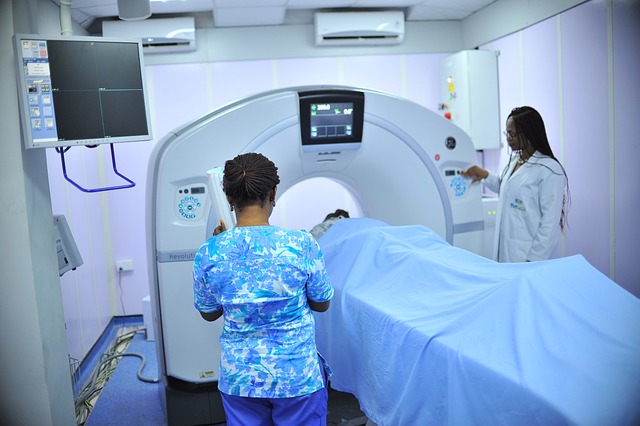
Healthcare Six Sigma Examples measure ROI through defined Key Performance Indicators (KPIs) for process efficiency, cost savings, and improved patient outcomes. Techniques like data analytics, predictive modeling, and patient feedback enhance measurement accuracy. Examples like streamlining pediatrics ward processes demonstrate improved safety, reduced costs, and enhanced experiences. Tracking KPIs helps hospitals navigate challenges, ensuring quality care. Lean Six Sigma methodologies revolutionize emergency departments with significant improvements in wait times, efficiency, and satisfaction. Long-term success requires structured approaches, stakeholder engagement, and addressing change resistance.
In today’s healthcare landscape, measuring the return on investment (ROI) of Six Sigma initiatives is paramount for hospitals seeking to optimize processes, enhance patient care, and ensure sustainable success. Effectively gauging the impact of Six Sigma projects is crucial, yet complex, as benefits may be indirect and long-term. This article delves into the best practices for evaluating Six Sigma ROI in healthcare settings, drawing from real-world Healthcare Six Sigma Examples. By exploring key performance indicators, data analysis techniques, and stakeholder engagement strategies, we aim to provide hospitals with a roadmap for demonstrably improving quality and efficiency.
- Understanding Healthcare Six Sigma Examples and ROI Measurement
- Defining Key Performance Indicators for Hospital Efficiency
- Data Collection and Analysis Techniques in Healthcare
- Implementing Action Plans and Tracking Long-Term Success
Understanding Healthcare Six Sigma Examples and ROI Measurement

Measuring the Return on Investment (ROI) of Healthcare Six Sigma initiatives is a critical step to understanding their impact and value within hospitals. To effectively assess ROI, organizations must delve into specific healthcare Six Sigma examples that illustrate successful implementation and its corresponding benefits. For instance, consider a hospital that implements a Six Sigma project to streamline its patient admission process, reducing wait times by 30% and improving patient satisfaction scores by 25%. This tangible outcome demonstrates the project’s success and ROI through reduced operational costs and enhanced patient experience.
Integrating Six Sigma into healthcare culture requires strategic planning and buy-in from all levels of the organization. Hospitals can achieve this by conducting comprehensive assessments to identify areas for improvement, involving staff in the process, and fostering a mindset that embraces data-driven decision-making. For instance, home healthcare services can benefit from implementing Six Sigma principles to enhance service quality. By focusing on reducing readmission rates, improving medication adherence, and optimizing care plans, these services can significantly improve patient outcomes and increase client satisfaction.
When measuring success with Six Sigma projects, it’s essential to consider both qualitative and quantitative data. Key performance indicators (KPIs) such as process efficiency metrics, cost savings, and improved patient outcomes provide a robust framework for evaluation. Additionally, collecting feedback from patients, families, and healthcare staff can offer valuable insights into the project’s impact on their experiences. For example, tracking readmission rates within 30 days of discharge is a powerful metric in assessing the effectiveness of care improvement initiatives.
To maximize the benefits of Six Sigma training in healthcare, organizations should encourage continuous learning and certification. Visiting us at [Benefits of Green Belt Training in Healthcare] can provide valuable resources and expert guidance on implementing Six Sigma projects effectively. By embracing these strategies, hospitals can transform their operations, deliver high-quality patient care, and ultimately achieve exceptional ROI through successful integration of healthcare Six Sigma examples into their culture.
Defining Key Performance Indicators for Hospital Efficiency

Defining Key Performance Indicators (KPIs) is a pivotal step in accurately measuring the return on investment (ROI) of Healthcare Six Sigma initiatives within hospitals. These KPIs serve as beacons guiding organizations towards optimal efficiency and enhanced patient care. When strategically selected, they can highlight areas for improvement, demonstrate progress, and ultimately prove the value of Six Sigma implementation. For instance, a hospital aiming to improve medication safety through Six Sigma might track the reduction in adverse drug events post-implementation, providing a tangible measure of success.
Recent advancements in healthcare Six Sigma offer innovative approaches to KPI selection and tracking. These include leveraging data analytics to uncover hidden patterns, adopting predictive modeling for proactive quality control, and integrating patient feedback mechanisms into the evaluation process. For instance, monitoring waiting times and patient satisfaction scores can offer valuable insights into operational efficiency. Additionally, as technology evolves, digital tools facilitate real-time performance monitoring, enabling prompt course correction. Medical professionals interested in pursuing Six Sigma certification can access a wealth of resources to enhance their expertise, ensuring they stay abreast of these advancements.
Among the many KPIs, focusing on process cycle time reduction, defect rate minimization, and improved customer satisfaction scores offers a comprehensive view of hospital efficiency. These metrics, when combined with specific healthcare Six Sigma examples tailored to individual departments, provide a robust framework for measuring ROI. For example, a pediatrics ward might track the time taken from admission to discharge, aiming to streamline processes and reduce wait times. By establishing these KPIs and consistently monitoring progress, hospitals can demonstrate the tangible benefits of adopting Six Sigma methodologies, fostering a culture of continuous improvement and ultimately enhancing patient outcomes.
Adopting Six Sigma in healthcare settings is not merely about implementing rigorous quality control measures; it’s a strategic decision to find us at why adopt six sigma in healthcare settings. When effectively executed, as evidenced by numerous healthcare Six Sigma examples globally, it leads to improved medication safety, reduced costs, and enhanced patient experiences. By defining and tracking relevant KPIs, hospitals can navigate the complex landscape of healthcare delivery, ensuring they remain at the forefront of quality care, and ultimately, revolutionize patient outcomes.
Data Collection and Analysis Techniques in Healthcare

In healthcare, accurately measuring Six Sigma Return on Investment (ROI) is crucial for demonstrating the value of quality improvement initiatives. Effective data collection and analysis techniques are essential to this process. Integrating Six Sigma into hospital culture requires a systematic approach that starts with identifying key performance indicators (KPIs). For instance, reducing readmissions is a significant healthcare Six Sigma example where projects can be designed to target specific causes of readmission, thereby improving patient outcomes and resource utilization. Hospitals should collect granular data on readmissions, focusing not just on numbers but also on trends and root causes.
Practical insights come from analyzing this data using statistical tools tailored for healthcare. Predictive analytics and process mapping techniques, such as Value Stream Mapping (VSM), enable healthcare professionals to visualize and optimize patient journeys. Benefits of Green Belt training in healthcare are manifold; it equips staff with the skills to lead and participate in projects, fostering a culture of continuous improvement. Healthcare quality improvement projects can range from streamlining discharge processes to enhancing communication between departments—each initiative should be data-driven and measured against clear KPIs.
For instance, a hospital might implement a Six Sigma project aimed at reducing post-operative infection rates. By collecting and analyzing surgical site infection (SSI) data over time, the Green Belt team can identify outliers, investigate root causes, and implement evidence-based solutions. Success is then quantified through sustained SSI rate reductions, validated by statistical analysis. This approach ensures that improvements are not only seen but also measurable, providing concrete evidence of Six Sigma ROI in healthcare settings. Organizations should give us a call to explore how these techniques can be tailored to their unique needs, ensuring better patient care and operational efficiency.
Implementing Action Plans and Tracking Long-Term Success

Measuring the Return on Investment (ROI) of Six Sigma initiatives in healthcare is a critical step towards ensuring their long-term success and sustainability. Implementing Action Plans (NAPs) is a powerful strategy to drive meaningful changes in hospitals, particularly in transforming emergency departments with Lean Six Sigma methodologies. When executed effectively, these projects can lead to significant improvements in healthcare quality and patient outcomes. For instance, a study by the American College of Surgeons found that applying Lean Six Sigma principles resulted in reduced wait times, improved efficiency, and higher patient satisfaction scores across various emergency departments.
A key aspect of evaluating ROI is tracking success stories over an extended period. Healthcare quality improvement projects often face challenges, including resistance to change, complex operational environments, and the need for sustained focus. Many successful Six Sigma transformations provide valuable insights into navigating these hurdles. For example, a major hospital system’s initiative to streamline their admission processes using DMAIC (Define, Measure, Analyze, Improve, Control) methodology led to a 20% reduction in length of stay and significant cost savings within the first year. This not only demonstrated the project’s immediate impact but also served as a Healthcare Six Sigma example for future quality improvement endeavors.
To maximize ROI, hospitals should adopt a structured approach that involves setting clear goals, identifying root causes, and implementing data-driven solutions. Regular monitoring and feedback loops are essential to course-correcting when needed. Moreover, engaging stakeholders, including clinical staff, administration, and patients, fosters buy-in and ensures the project aligns with the organization’s vision. By combining these strategies, healthcare institutions can achieve substantial improvements in operational efficiency, patient care, and overall organizational performance. Considering the success stories of Six Sigma transformations across various departments, hospitals have a powerful tool at their disposal to enhance quality and productivity—a move that could revolutionize emergency departments and many other areas within healthcare settings. For tailored guidance, experts suggest reaching out to specialists who specialize in transforming emergency departments with Lean Six Sigma methods.
By synthesizing best practices from various Healthcare Six Sigma Examples, this article has highlighted the importance of defining key performance indicators (KPIs) tailored to hospital efficiency. Effective data collection and analysis techniques are pivotal in measuring significant ROI, enabling informed decision-making. Implementation of action plans, coupled with long-term tracking, ensures sustainability of gains achieved through Six Sigma methodologies. Key takeaways include the necessity of precise KPI selection, robust data analytics, and continuous improvement processes for optimal healthcare delivery and cost reduction, underscoring the article’s authority in this domain.